The Challenge
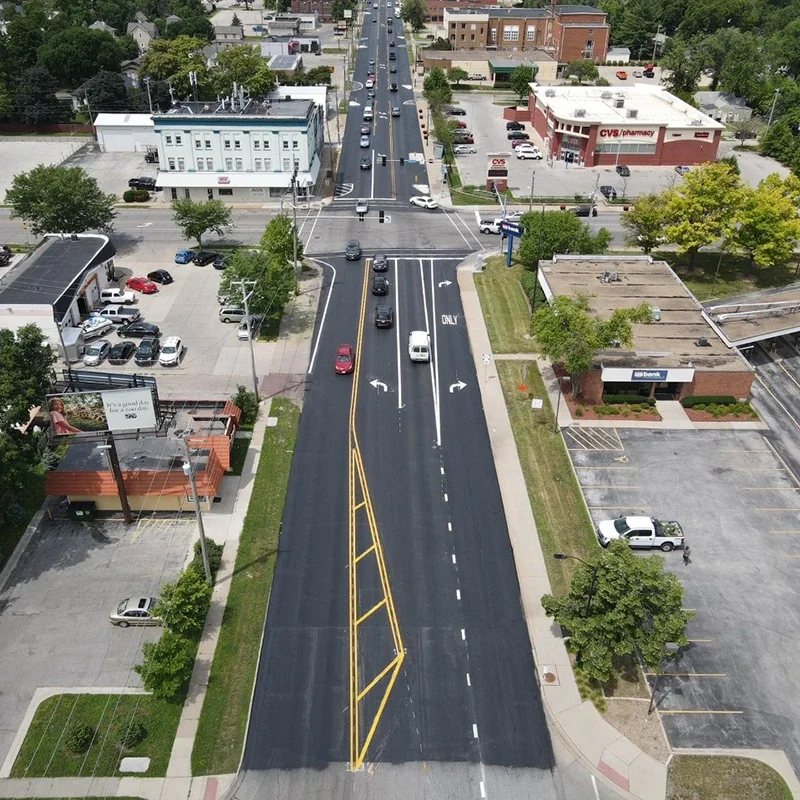
The urban mobility corridor faced increasing congestion due to rapid urban growth, rising traffic volumes, limited roadway expansion opportunities, and the need to balance the requirements of multiple transportation modes. Existing infrastructure struggled to efficiently accommodate vehicles, pedestrians, cyclists, and public transport systems, while fluctuating traffic patterns and peak-hour demand created operational inefficiencies, safety concerns, and inconsistent travel times.
Our Solution
Alada Solutions delivered an integrated mobility planning and roadway engineering strategy combining advanced traffic simulation, urban roadway design, multimodal transport integration, and intelligent transportation systems (ITS). The solution included roadway capacity optimization, intersection improvements, pedestrian and cycling infrastructure, public transport prioritization measures, adaptive traffic signal systems, real-time traffic monitoring, and data-driven simulation modeling to evaluate and optimize transportation performance across the corridor.
The Results
The project successfully improved traffic flow, reduced congestion levels, optimized intersection performance, and enhanced travel time reliability across the urban corridor. Road safety was strengthened through improved infrastructure design for all road users, while better integration of public transport, cycling, and pedestrian networks promoted sustainable mobility. The implementation of smart traffic management technologies established a scalable and future-ready transportation corridor capable of supporting long-term urban growth and evolving mobility demands.